
Self-Healing PPF: How Does It Actually Work?
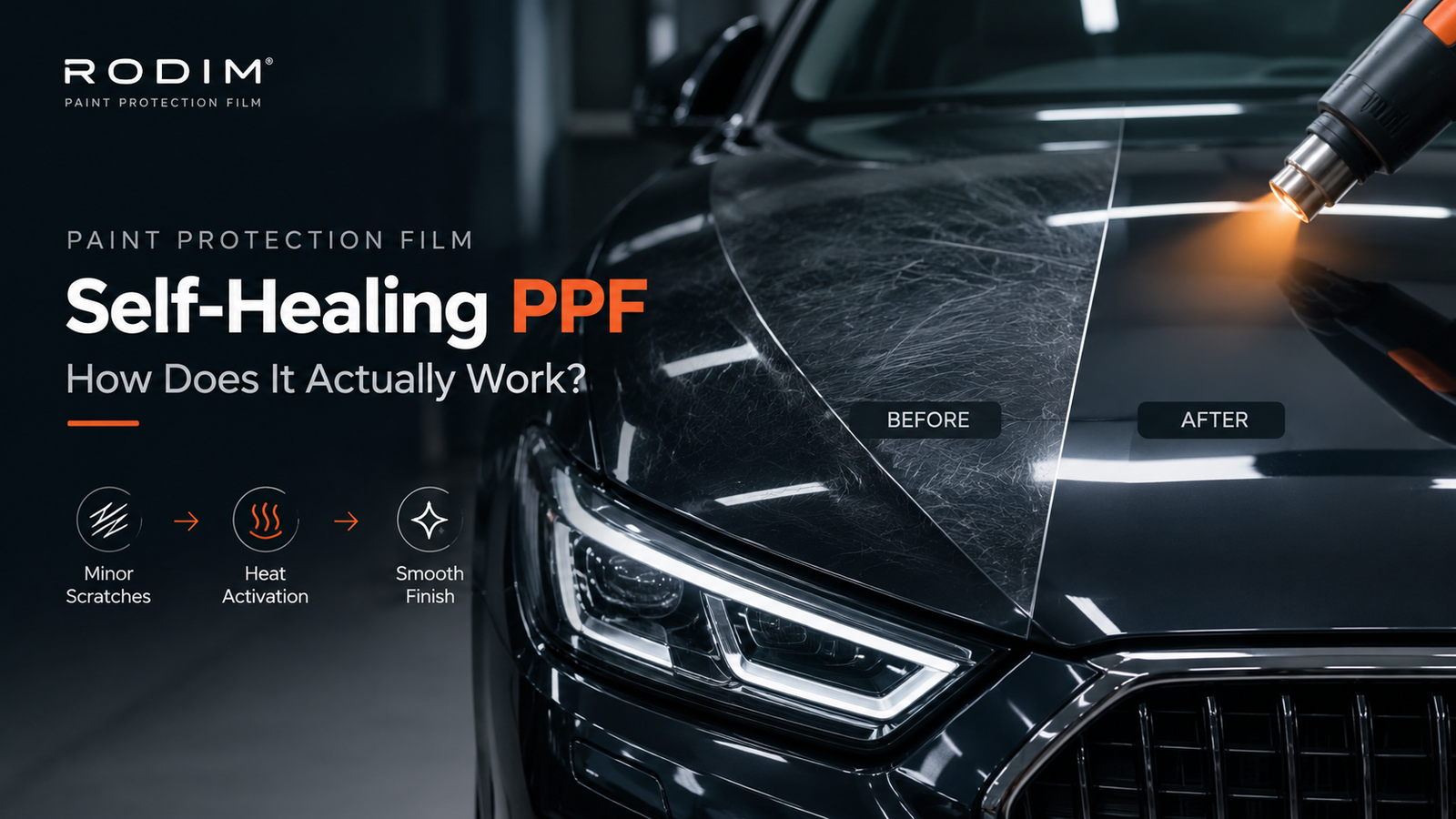
Table of Contents
What Is Self-Healing PPF?
Self-healing PPF is a transparent film applied over a car’s painted surfaces. It acts as a protective barrier against minor scratches, stone chips, and environmental contaminants. Most modern PPF products use a flexible material called thermoplastic polyurethane (TPU). It is valued for its durability and impact resistance. Self-healing films also feature a specially engineered topcoat. It allows certain minor surface imperfections to recover under suitable conditions. Importantly, the film’s topcoat – not the car’s paint – is what self-heals. The technology reduces the visibility of eligible scratches rather than repairing every type of damage.How Does Self-Healing PPF Actually Work?
The technology lies in the film’s specialised topcoat. Understanding its construction and response to minor scratches makes the process easier to follow.What Happens Inside the Film?
A typical PPF system contains three functional layers:● Topcoat: Provides gloss, contaminant resistance, and self-healing properties in suitable films.
● TPU layer: Helps absorb everyday impacts and resist abrasions.
● Adhesive layer: Bonds the film to the car’s paint.
When a fine scratch forms in the topcoat, the material can gradually recover under suitable conditions. The film’s construction and formulation determine how effectively this happens.How Heat Helps the Film Heal
The process generally involves three steps:- A minor scratch forms. Contact with a wash mitt, dust particles, or another surface creates a fine mark on the film.
- The topcoat responds to warmth. Heat can increase the mobility of the topcoat material. This allows it to relax after the surface has been disturbed.
- The surface recovers. As the material returns closer to its original condition, the scratch may become less visible or disappear.
The result depends on the film, the depth of the mark, and the temperature. Some products heal at ambient temperatures, while others benefit from additional warmth.
Self-healing materials are an active area of materials science research. Explore this scientific research on self-healing polymers to learn more about the mechanisms used to regenerate scratched surfaces.Does Self-Healing PPF Need Sunlight?
Not always. Certain films can recover from minor scratches at normal temperatures, while others respond more effectively to heat. Sunlight may help accelerate healing, but it is not a universal requirement. Avoid applying direct heat with a heat gun unless the manufacturer or a qualified installer specifically recommends it. Rodim PPF incorporates self-healing technology across its film range, helping minor surface scratches and swirl marks fade under suitable conditions.What Scratches Can Self-Healing PPF Repair?
Self-healing PPF works best on certain minor surface imperfections. When you understand PPF’s limits, it helps set realistic expectations. It may help reduce:● Fine scratches on the topcoat.
● Light swirl marks caused by improper washing.
● Minor surface scuffs and abrasions.
It cannot reliably repair:● Deep scratches that penetrate the film.
● Cuts, tears, or punctures.
● Severe stone impacts that damage the film and paint underneath.
● Paint scratches or chips that existed before installation.
Therefore, self-healing PPF should not be considered scratch-proof. It is designed to reduce specific surface marks while providing an additional layer of paint protection.Self-Healing PPF vs Regular PPF
Both types of paint protection film help shield a car’s original paint, but their surface-recovery capabilities can differ.| Feature | Self-Healing PPF | PPF Without Self-Healing Properties |
| Minor surface scratches | Designed to reduce the appearance of certain marks | Marks may remain visible |
| Swirl marks | May recover under suitable conditions | Recovery depends on the formulation |
| Paint protection | Helps protect against everyday abrasions and road debris | Also provides a protective barrier |
| Maintenance | Requires appropriate cleaning and care | Requires appropriate cleaning and care |
What Are the Benefits of Self-Healing PPF?
Self-healing technology offers several practical advantages for car owners.1. Maintains a glossy finish: Helps reduce the visibility of certain fine scratches and swirl marks.
2. Protects the original paint: Acts as a sacrificial barrier against some minor abrasions.
3. Reduces the need for cosmetic correction: Some surface marks may fade without polishing.
4. Supports long-term paint care: Professional installation and proper maintenance help preserve the car’s finish.
Results depend on film quality, installation, maintenance, and the type of damage.Is Self-Healing PPF Suitable for Indian Roads?
Indian driving conditions make paint protection worth considering, particularly for vehicles frequently driven on highways or parked outdoors.● Strong sunlight and heat: UV resistance matters because prolonged exposure can contribute to film ageing. Heat may also support self-healing in films designed to respond to it.
● Dust and pollution: Wiping dust off without washing can create fine scratches. Regular, careful cleaning helps reduce this risk.
● Highway driving: Flying stones and road debris can damage exposed paint. PPF provides a barrier, although severe impacts may still cause damage.
● Monsoon conditions: Mud, moisture, and road grime make regular washing and inspection important.
Moreover, self-healing is only one factor to consider. Material quality, optical clarity, chemical resistance, installation, and after-sales support also affect the ownership experience.Why Choose Rodim Self-Healing PPF?
RODIM is an automotive surface protection brand powered by BASF’s material science and engineering expertise. Its paint protection films use thermoplastic polyurethane (TPU) technology to help protect vehicle paint against everyday road hazards. All Rodim PPF films feature self-healing technology. They help minor surface scratches and swirl marks fade under suitable conditions. This combines everyday paint protection with a surface-recovery feature designed to help maintain the vehicle’s appearance. With a focus on Indian road and climate conditions, Rodim offers car owners a way to protect their vehicle’s original finish. As with any PPF, results depend on various factors. These include the nature of the damage, professional installation, and appropriate maintenance. Explore the RODIM R1 self-healing PPF, RODIM R-Star, and RODIM R3 Pro PPF to compare protection options for your vehicle.How to Maintain Self-Healing PPF
Proper care is essential to preserve the film’s clarity and performance.● Wash carefully: Use a suitable pH-neutral car shampoo and a clean wash mitt.
● Avoid dry wiping: Dust particles can scratch the surface when rubbed across it.
● Skip harsh chemicals: Avoid solvent-based cleaners. Also avoid abrasive products unless specifically approved.
● Follow aftercare instructions: Observe your installer’s recommended waiting period before washing the car.
● Protect the edges: Avoid directing high-pressure water at the film’s edges, and have lifting or bubbling checked by a professional.
Follow Rodim’s applicable aftercare guidance for the film installed on your vehicle. Additionally, don’t assume every scratch will disappear; persistent marks should be assessed by an installer. To maintain the film’s clarity and performance, follow the recommended PPF aftercare instructions, including the correct washing method and precautions around film edges.Final Thoughts
Self-healing PPF helps protect your car’s paint while reducing the visibility of certain minor scratches. You can explore Rodim’s PPF range to learn more about its self-healing films. You can also consult an authorised installer about suitable protection for your vehicle. Before choosing a film, review the applicable RODIM PPF warranty coverage and confirm the terms for your selected product.FAQs
How long does self-healing PPF take to heal?
It depends on the film, temperature, and how severe the scratch is. Some minor marks may fade within minutes or hours. Major marks may take longer to heal.
Can self-healing PPF repair deep scratches?
No. It is designed for certain minor surface marks. Deep scratches, cuts, and punctures may require professional repair or film replacement.
Does self-healing PPF work without sunlight?
Some films heal at ambient temperatures, while others respond better to warmth. Check the manufacturer’s specifications for the particular product.
Is self-healing PPF better than ceramic coating?
They serve different purposes. PPF provides a physical barrier against minor abrasions and some stone impacts, while ceramic coating primarily improves surface protection, water behaviour, and ease of cleaning. Compatible products can sometimes be used together. If you’re deciding between these two protection options, read our detailed guide to ceramic coating vs PPF to understand their differences.


