
Full Body PPF vs Partial PPF: Which One Should You Choose?
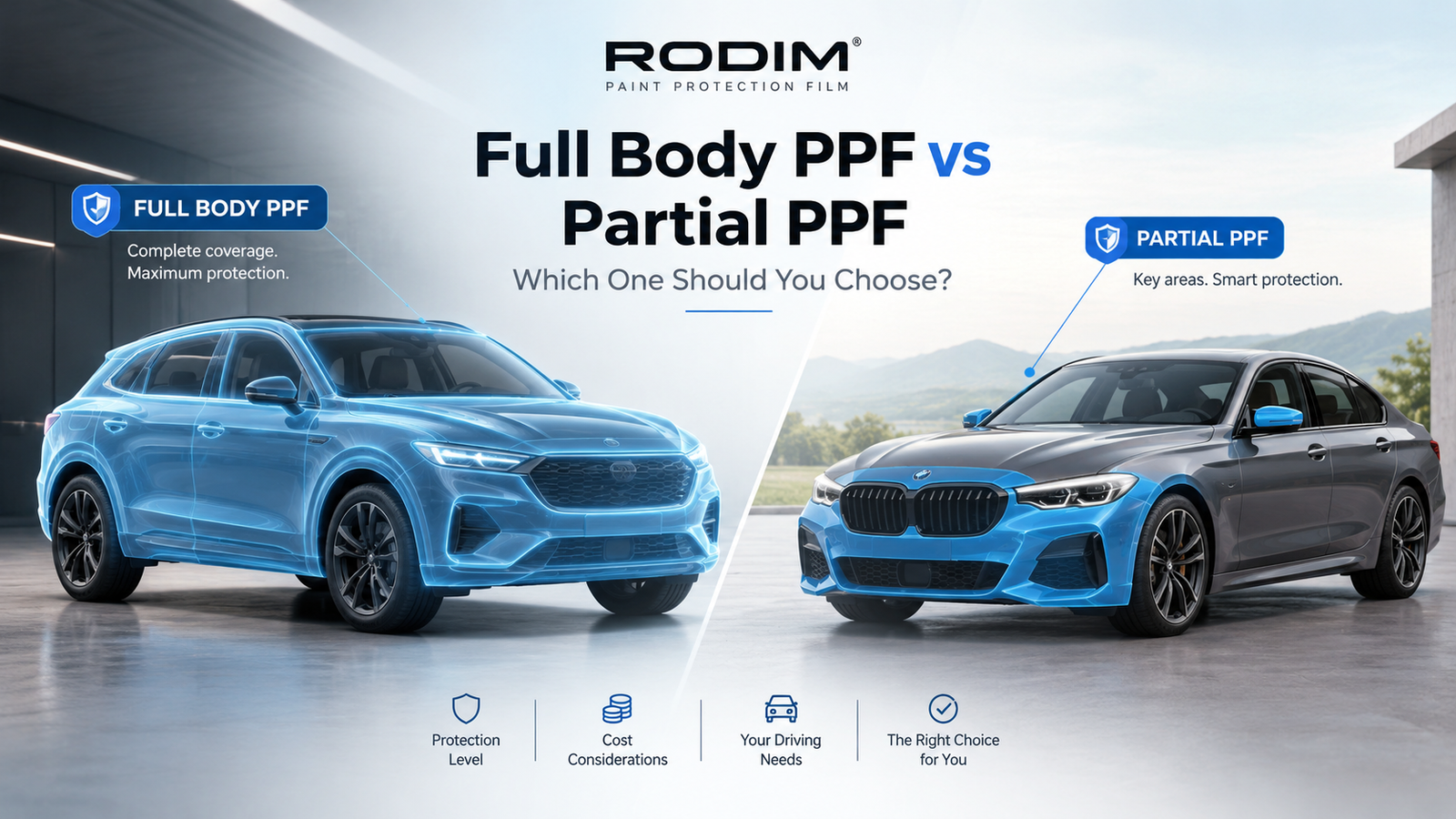
Table of Contents
Full-body PPF offers extensive paint protection. Partial PPF, on the other hand, focuses on selected areas at a lower upfront cost. The right choice depends on your budget, driving habits, car type, and how long you plan to keep your vehicle.
Let’s compare both options to help you decide.
What is Full Body PPF?
Full body PPF involves applying paint protection film to all painted exterior panels of your car. It creates a protective layer against everyday hazards. These include minor scratches, stone chips, and environmental contaminants.
Coverage typically includes:
● Bonnet, front bumper, and fenders.
● Doors, side panels, and side mirrors.
● Roof, pillars, and boot lid.
● Rear bumper and other painted exterior panels.
Benefits of full body PPF
● Comprehensive coverage: Protects more painted surfaces against everyday wear.
● Consistent appearance: Helps maintain a uniform finish across protected panels.
● Long-term paint preservation: Reduces the risk of damage to the original paint.
● Greater peace of mind: You don’t have to worry as much about leaving certain panels unprotected.
The main drawback is the higher initial investment. This is because more film and installation work are required.
What is Partial PPF?
Partial PPF protects selected areas instead of covering the entire vehicle. It is a practical option for car owners who want to prioritise vulnerable panels without paying for full body coverage.
Common areas include:
● Front bumper and bonnet.
● Front fenders and side mirrors.
● Door edges and handle recesses.
● Rocker panels and other vulnerable sections.
Not every partial PPF package offers the same coverage. Some protect only a few high-impact areas. Others cover most of the front end.
Benefits of partial PPF
● Lower upfront cost: Uses less film than full body coverage.
● Targeted protection: Focuses on areas frequently exposed to road debris.
● Flexible coverage: Lets you choose panels according to your driving conditions and budget.
● Quicker installation: Generally requires less time than a full-body application.
However, uncovered panels remain exposed to paint damage. Moreover, the film’s edges may be visible depending on the package and installation.
Full Body PPF vs Partial PPF: Key Differences
Feature | Full Body PPF | Partial PPF |
Coverage | All included painted exterior panels | Selected panels |
Protection | Extensive coverage | Targeted coverage |
Initial cost | Higher | Lower |
Appearance | More uniform finish | Visible film edges may occur |
Installation time | Generally longer | Generally shorter |
Best suited for | Long-term ownership and broader protection | Budget-conscious owners |
How Much Does Full Body PPF vs Partial PPF Cost in India?
Cost is often a deciding factor when choosing paint protection film. The price depends on your car’s size and film quality. It also depends on coverage area and installation expertise.
A partial front-end package may cost around ₹20,000 – ₹55,000. Meanwhile, a full body PPF for many everyday hatchbacks, sedans, and SUVs can range from approximately ₹55,000 to ₹1,50,000. Premium and luxury vehicles may cost considerably more.
Before choosing a package, compare:
● Film quality: Material, durability, clarity, and warranty can influence the price.
● Coverage area: A full-front package costs more than protecting only the bumper and mirrors.
● Installation quality: Surface preparation, precise cutting, and careful application matter.
● Additional services: Paint correction and other preparation work may increase the total.
Don’t choose solely on the lowest quotation. Confirm exactly which panels are included. Also, ask whether the price covers installation and warranty.
Full Body vs Partial PPF: Which is Better for Indian Roads?
Indian driving conditions can make either option worthwhile, depending on your routine.
A. Highway Driving and Long-Distance Travel
Highway driving exposes your car to loose gravel and stones kicked up by other vehicles. The front bumper, bonnet, fenders, and mirrors are particularly vulnerable.
If you frequently travel between cities, a partial package covering these areas can be a sensible starting point. Full body PPF is worth considering if you also want protection for the doors, roof, and rear panels.
B. City Driving and Daily Commuting
Congested roads, tight parking spaces, and frequent cleaning can expose your car to scratches and everyday wear.
Partial PPF may suit city drivers who want to control costs. Consider protecting door edges, handle recesses, and rocker panels if these areas are particularly vulnerable.
C. Heat, Dust, Pollution, and Monsoon Conditions
Strong sunlight, dust, bird droppings, and environmental contaminants can affect your car’s finish. PPF helps protect covered surfaces. However, it doesn’t eliminate the need for regular car cleaning.
Full body coverage protects more painted panels. Meanwhile, uncovered areas in a partial package still require care. Therefore, consider your parking conditions and local environment before deciding.
Which Areas Should You Protect If You’re on a Budget?
If full body PPF isn’t within your budget, prioritise areas according to your driving habits.
● Front bumper: Frequently exposed to road debris and stone chips.
● Bonnet and front fenders: Vulnerable to flying stones during highway driving.
● Side mirrors: Exposed to passing traffic and minor impacts.
● Door edges and handle recesses: Prone to scratches during everyday use.
● Rocker panels and rear bumper: Worth considering if your vehicle regularly encounters rough roads or tight parking spaces.
You can begin with a suitable partial package. Then, you can extend coverage later. However, an installer should inspect the existing film and exposed paint before adding coverage.
Does Full Body PPF Last Longer Than Partial PPF?
Not necessarily. The lifespan of paint protection film depends more on its quality, installation, exposure, and maintenance than on the amount of coverage.
However, full body PPF protects more of the car. It can help maintain a more consistent appearance across its panels. With partial coverage, protected and unprotected paint may age differently over time.
Additionally, choose a reputable installer. Follow the recommended cleaning routine and understand the film’s warranty terms. Neither option makes your car completely immune to paint damage.
Why Choose Rodim for Your Car’s PPF?
Choosing the right film matters as much as choosing the right coverage. Rodim offers PPF solutions designed to help preserve your car’s finish against everyday wear. Self-healing technology is available across all Rodim PPF films. This helps minor surface marks disappear under suitable heat conditions. Explore the available options to find the right solution for your vehicle.
Full Body or Partial PPF: What’s the Final Verdict?
Neither option is right for every car owner. Full body PPF is suitable if you want extensive coverage and plan to preserve your car’s finish over the long term. Partial PPF is a sensible alternative if you have a tighter budget. Choose partial PPF if you want to prioritise high-impact areas.
Ultimately, consider your driving habits, parking conditions, ownership plans, and budget before deciding.
Ready to protect your car’s finish? Visit Rodim to explore its PPF solutions and find the right coverage for your vehicle. Make an informed choice today and give your car’s paint the protection it deserves.
FAQs
Is partial PPF enough to protect a car?
Yes, partial PPF can provide useful protection. This happens when you choose the right panels for your driving conditions. However, uncovered areas remain exposed to paint damage.
Can I upgrade from partial PPF to full body PPF later?
Yes. An installer can assess the existing film and exposed paint before extending coverage. Some areas may require film removal or paint preparation.
Is full body PPF worth it for a new car?
It can be worthwhile if you want broader paint protection and plan to keep the car for several years. Partial PPF may be more practical if your budget is limited.
Does partial PPF cause uneven paint fading?
Not necessarily, but protected and unprotected panels may age differently because they receive different levels of exposure. Visible film edges may also affect the overall appearance.


