
PPF for New Car Delivery: Should You Get It Before Registration?
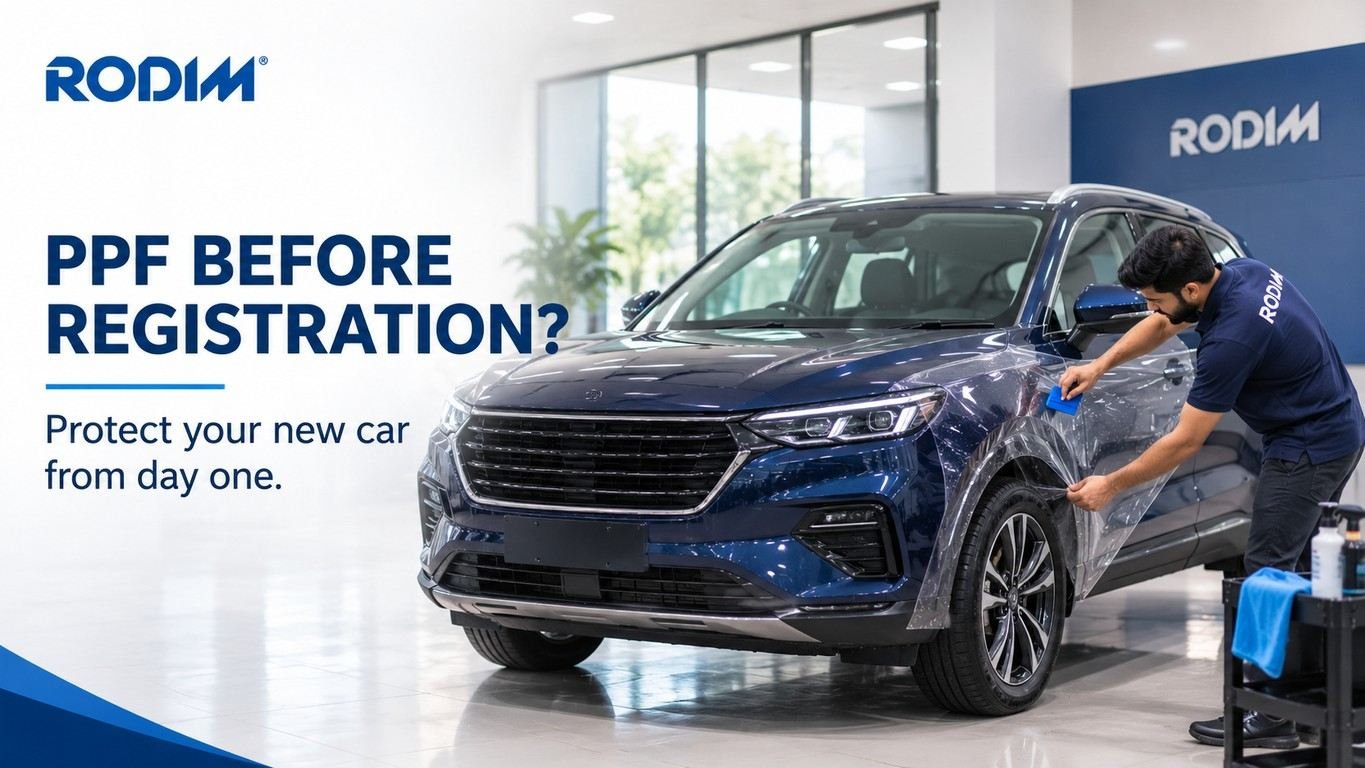
Table of Contents
Getting paint protection film (PPF) installed before your first regular drive is a good way to protect your new car’s paint from day one. While installation before registration is not essential, planning it before delivery is a smart choice. It helps minimise exposure to road debris, scratches, and other everyday hazards.
If you are planning PPF for new car delivery, timing matters as much as the film itself. The key is to research the right PPF, choose a reliable detailer, and coordinate installation in advance.
Should You Get PPF Before Car Registration?
Yes, getting PPF installed before your car’s first regular drive is generally preferable, provided the dealership and installer can coordinate the process. Registration itself does not determine when PPF can be applied. The important factors are the vehicle’s availability, paint condition, and arrangements for transporting it to the installation facility.
|
Factor |
Before registration or delivery |
After registration or delivery |
|---|---|---|
|
Paint protection |
Protection begins before regular driving |
Paint remains exposed until installation |
|
Scheduling |
Requires advance coordination |
Offers more flexibility |
|
Convenience |
May require arranging transportation |
Easier to book after delivery |
If you can arrange a quality installation before delivery, consider doing so. Otherwise, book it as soon as practical after taking possession of the car.
Many buyers ask, is PPF worth it? Knowing the paint protection film car cost beforehand helps you plan better.
Can PPF Be Installed Before Taking Delivery of a New Car?
Yes, provided the dealership allows access to the vehicle and the installer can accommodate the schedule. Factory-applied paint is generally cured during manufacturing. Hence, it does not usually require the same waiting period as freshly repainted panels.
Before making arrangements, confirm the following:
- Whether the dealership permits the car to be sent to an external installer before delivery.
- Whether installation will affect your delivery schedule.
- How the car will be transported if registration or other delivery formalities aren’t complete yet.
- Whether you can inspect the paint before the film is applied.
If any panel has been repaired or repainted, ask the installer whether additional curing time is needed.
Benefits of Getting PPF on a New Car Early
Installing PPF early helps protect the original paint before everyday driving takes its toll.
1. Protection Against Stone Chips and Road Debris
Stones, gravel, and other debris can chip paint, particularly on the front bumper, bonnet, fenders, and side mirrors. PPF creates a protective layer over these car surfaces. The film helps reduce the risk of damage during commutes and highway journeys.
2. Preserving the Original Paint
Dust, minor scratches, swirl marks, bird droppings, and insect residue can affect your car’s finish. PPF helps protect the underlying paint from many everyday hazards. However, regular cleaning and maintenance remain necessary.
How to Choose the Right PPF and Detailer Before Delivery
Choosing PPF based only on price can lead to an uninformed decision. Use the time before delivery to research the film manufacturer and detailer so you can make an informed purchase.
1. Check the PPF Manufacturer’s Capabilities
A manufacturer’s expertise can offer useful insight into its ability to develop and maintain consistent film quality. Consider asking:
- TPU manufacturing: Does the company manufacture thermoplastic polyurethane (TPU) itself, or source finished film from another supplier?
- In-house production: Does it have its own production facilities and quality-control processes?
- Quality testing: What tests are performed for durability, clarity, and flexibility? Do they perform tests for yellowing resistance?
- Product specifications: Can the manufacturer explain the film’s construction, thickness, finish, and intended use?
- Technical support: Does it provide installation guidance? Are product documentation and support included if an issue arises?
A company manufacturing its own TPU or operating in-house facilities is not automatically better than one sourcing materials. Evaluate these factors alongside product performance, transparency, and quality assurance.
Rodim benefits from BASF’s vertically integrated manufacturing capabilities, spanning TPU raw materials to finished films. This supports consistent material quality, precision production, and rigorous testing.
2. Understand the Warranty Terms
Check the warranty duration and whether it covers issues such as yellowing, cracking, peeling, or bubbling, where applicable.
Also clarify exclusions, maintenance requirements, and claim procedures. Check whether installation by an authorised installer is necessary. A longer warranty is valuable only when its terms are clear and appropriate support is available.
3. Evaluate the Detailer’s Experience
Even high-quality film needs proper installation. Compare detailers based on their experience, installation environment, surface preparation, and aftercare support.
Ask to see previous work, particularly around edges, curved panels, and other challenging areas. A professional installer should explain the preparation process, expected installation time, and aftercare precautions.
4. Compare the Overall Value, Not Just the Price
Get quotations from multiple reliable detailers and compare what each includes. Consider film specifications, coverage, installation quality, warranty, reputation, and aftercare facilities.
A lower quote may involve a different film, less coverage, or different service terms. Understanding these differences helps you assess value rather than choosing solely on initial cost.
What Should You Check During the Pre-Delivery Inspection Before PPF?
Inspect the car before applying PPF because the film will not remove existing paint defects.
- Examine the paint: Look for scratches, dents, uneven finishes, or other visible defects under good lighting.
- Document issues: Photograph any concerns and report them to the dealership before proceeding.
- Check repaired panels: Confirm whether repainted areas have cured sufficiently.
- Confirm surface preparation: Ensure the installer inspects and prepares the paint before application.
Resolve paint concerns before installation, as existing defects may remain visible beneath the film.
Should You Get Full-Body PPF or Partial PPF?
Full-body PPF covers more painted surfaces and provides broader protection, but generally costs more. Partial PPF protects selected high-impact areas, such as the front bumper, bonnet, fenders, and side mirrors.
Your choice should depend on your budget, driving conditions, parking arrangements, and how much of the car you want to protect.
Coverage also affects the paint protection film cost in India, so ask yourself: is PPF worth it for the paint protection you need?
For a detailed comparison, read our blog, “Full Body PPF vs Partial PPF: Which One Should You Choose?”
How to Plan PPF Installation Around Your New Car Delivery
Use this checklist to prepare in advance:
- Research early: Compare manufacturers, film specifications, warranty terms, and detailers.
- Schedule your PDI: Inspect the paint and report defects before installation.
- Coordinate with the dealership: Confirm whether pre-delivery installation is permitted and whether it affects the delivery schedule.
- Choose coverage: Decide between full-body and partial PPF.
- Arrange professional installation: Prioritise paint preparation and installation quality over speed.
- Follow aftercare instructions: Ask when the car can be washed and how to care for the film during its initial curing period.
If the car has not been registered, confirm the permitted transportation arrangements.
How Does Rodim PPF Fit Into Your New Car Delivery Plan?
Planning ahead gives you time to explore Rodim’s PPF options and compare film specifications, warranty terms, installation processes, and aftercare support. Whether you arrange installation before delivery or shortly afterwards, prioritise film quality and the expertise of the installer.
Conclusion
The best time to protect your new car’s paint is before it faces regular driving conditions. Plan ahead, compare manufacturers and detailers, and evaluate manufacturing capabilities, warranty terms, and installation expertise-not just price. Compare the paint protection film car cost and paint protection film cost in India, and the answer to “is PPF worth it?” becomes clearer, since good paint protection is about long-term value. Explore Rodim PPF to compare your protection options and plan an installation around your new car delivery schedule.
FAQs
Should I get PPF before registration or after?
Getting PPF before your first regular drive is preferable when practical because it protects the paint earlier. However, registration itself is not the deciding factor. Coordinate with the dealership and installer to arrange a suitable time.
Can I get PPF installed on the day of delivery?
Yes, you can get it installed on the delivery day if you have booked in advance. Moreover, it depends on whether the installer has enough time for inspection, surface preparation, and application.
How soon should I get PPF on a new car?
Ideally, arrange PPF before regular driving or as soon as practical after delivery. Research your options in advance to choose a suitable film and installer without unnecessary delays.
What is the difference between Rodim R1 and Rodim R2?
R1 focuses on gloss, clarity, self-healing, and balanced protection at an economical price point. R2 adds film thickness and structural strength, with enhanced scratch protection, superior anti-aging performance, and long-term gloss stability for harsher driving conditions.
How much does PPF cost for a new car?
The cost depends on your car’s size and the film you choose. Rodim’s product pages indicate that good premium-quality PPF typically ranges from about ₹85,000 to ₹2.5 lakh. For an exact quote, share your car model and preferred film with the Rodim team.


